
In this guide
- Separate the different connection functions
- Review the complete load path and supports
- Coordinate transport and handling conditions
- Make assembly inspectable and repeatable
- Plan demounting and reuse as an assessed process
- Coordinate structural review with weather closure
- Use a connection deviation register across the full lifecycle
- Illustrative project review
- Build a quotation that can be evaluated line by line
- Agree factory inspection evidence for this configuration
- Coordinate shipment, installation preparation and local interfaces
- Define handover and the first operating review
- Conclusion
Procurement guidance by the HabKube project team. Examples and AI-generated images are illustrative, not documented customer deliveries or certified test results. Confirm technical and statutory requirements with qualified destination professionals.
Separate the different connection functions
Distinguish structural, weather and service interfaces
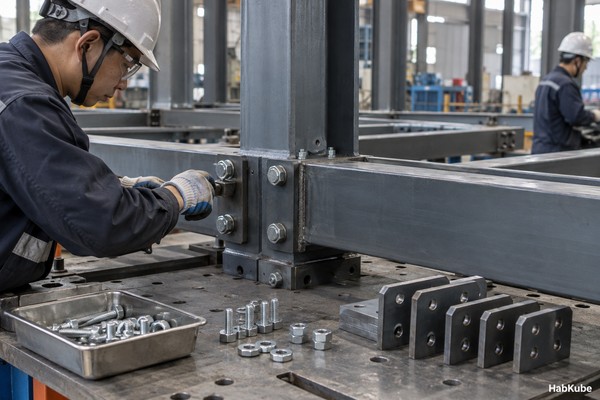
Identify connections between frame members, modules, supports, enclosure components and services. Each has a different purpose and acceptance basis. A visible bolt joining two elements does not describe every load path or weather detail in the building.
Ask for a connection schedule linked to controlled drawings. It should show the supplied configuration, assembly sequence, relevant components and inspection points. Structural dimensions and installation instructions need the responsible designer's approval; the buyer should not improvise them from a product photograph.
For a container house frame specification, clarify whether the proposed unit is a shipping container conversion or a purpose-designed modular frame. Similar external dimensions do not establish identical structural behavior, transport rules or connection details. Compare actual systems rather than treating the word container as an engineering specification.
Review the complete load path and supports
Connect the manufactured frame with the site design
Prefab house steel structure information should identify the actual members, materials and connections supplied. The engineer must evaluate the building, destination conditions and support arrangement together. A member size alone cannot demonstrate the complete system's capacity.
Ask how loads reach the supports and how module connections participate in the reviewed design. Changes to openings, stacking, attached accessories or site conditions can require reassessment. Do not infer suitability for a second level or a new location from a single-storey sample.
Keep engineering responsibilities named. The supplier may provide drawings and manufacturing data while a destination professional reviews local requirements and foundations. The contract should explain this division and the evidence required before production and installation release.
Coordinate transport and handling conditions
Use the approved handling method and component identification
A connection designed for installed use may also face handling and transport conditions that need review. Request approved package, lifting or handling information for the supplied system. The responsible parties should determine equipment and methods from that information rather than assume any visible frame point is suitable.
Identify installed components that require protection or removal for shipment. Loose hardware should be traceable to the assembly schedule and packed so the receiving crew can find it. Transport protection and weather closure are different responsibilities; both should be documented.
Agree how transit damage is recorded and assessed. A bent component or damaged connector should not be straightened or substituted casually at the destination. Report identifiers and photographs, retain relevant packing evidence and obtain a controlled correction from the responsible parties.
Make assembly inspectable and repeatable
Inspect critical details before finishes hide them
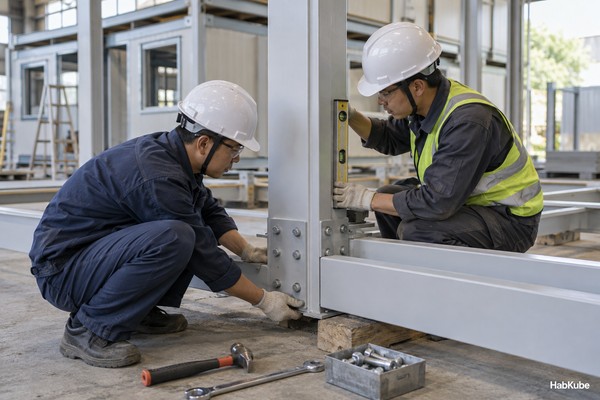
A modular building erection guide should reference the actual configuration and controlled connection details. Describe the assembly sequence, required tools, competent personnel, safety planning and inspection hold points. The destination installer must plan site-specific methods and any required licensed or specialist work.
Steel frame quality inspection can include material identity, fabrication dimensions, connection workmanship and other agreed checks. Each check needs a method and acceptance reference. A photograph of completed framing cannot prove every concealed connection or material property.
Schedule inspection before important details are concealed. Record component identification, drawing revision, deviations and correction evidence. Where a fastening instruction requires a specific method or value, use the approved design and relevant product instructions rather than a universal recommendation in a blog or catalogue.
Plan demounting and reuse as an assessed process
Keep future condition assessment and replacement parts visible
Demountable temporary housing should have a defined recovery method. Ask which parts can be reused, which are consumable and what checks are needed after disassembly. Do not interpret demountable as a guarantee that every component can be repeatedly reused in every condition.
Review access to connectors and services before deciding that relocation is practical. Finishes or local modifications may obstruct the original assembly method. Document the installed configuration and retain component references so the recovery team understands what changed during operation.
Each future site needs assessment of supports, conditions, use and approvals. Reuse may require repairs, replacement seals or other controlled work. Compare those responsibilities alongside initial purchase cost. An accurate reuse plan is more valuable than an unsupported claim of unlimited moves.
Coordinate structural review with weather closure
Keep related functions coordinated but their evidence distinct
Module joints must preserve the reviewed structural and enclosure arrangements. A structural connection can be correct while its weather detail is incomplete. Ask for separate inspection points where appropriate and coordinate local service openings so they do not undermine either function.
ICC off-site construction resources help frame manufacturing and destination responsibilities. The local team determines the applicable requirements and acceptable engineering evidence. A generic off-site construction statement does not establish that every proposed connection is suitable for the project.
Retain the connection schedule at handover, including modifications and inspection records. Give maintenance and relocation teams the correct references. When a future order changes layout or use, review the connection assumptions rather than copy a detail solely because it was used previously.
Use a connection deviation register across the full lifecycle
Questions to resolve in the buyer decision record
Record the controlled connection detail, component identifiers, inspection status and any approved deviation. The register should travel with the project records so factory staff, installers and future recovery teams can work from the same information.
Test the process with a damaged or missing component. Who identifies it, who assesses the effect and who approves the correction? A local replacement that appears similar is not automatically equivalent to a specified structural or enclosure part. Keep technical and commercial decisions linked rather than close the problem through an undocumented purchase.
Ask how the connection remains accessible after fit-out. If a panel or furniture component hides it, identify the approved inspection or removal route. This matters for maintenance and recovery, but access should not be achieved by altering a reviewed detail without authorization.
Compare initial assembly and future disassembly separately. The original sequence may not simply reverse once local services, finishes and modifications are present. Give the recovery team a documented condition assessment and approved method, including consumables and damaged parts. Do not promise a number of reuses without a system-specific basis.
Use unit and component identification to retain location history. A module moved to a different project should carry its accepted configuration and modification record. The new destination still needs review of loads, supports, services and approvals; historical use is information, not a universal permission to install.
This makes a connection system commercially understandable as well as technically controlled. The buyer can compare evidence, assembly work, local responsibilities and future recovery requirements. It avoids replacing those decisions with a large bolt photograph or a broad claim that every temporary building is infinitely reusable.
Project brief
Review the connection and reuse scope
Send your layout, local engineering requirements and proposed relocation plan. HabKube can discuss configuration information and inspection interfaces.
Get a project quoteIllustrative project review
Use the example to test your own assumptions
Illustrative example, not a HabKube reuse project: a contractor wants an office package that may move to another site. Its first request only specifies that connections should be bolted.
The review distinguishes structural joining, weather closure and service disconnection. The buyer asks for a controlled connection schedule, approved handling information and an assessed demounting method. It also identifies consumable items and inspection points after recovery. Destination engineers retain responsibility for each site's supports and conditions.
This creates a meaningful reuse brief. It does not promise a particular number of moves, but it makes the recovery procedure, component identification and future review responsibilities visible before purchase.
Build a quotation that can be evaluated line by line
For this project, the purchase brief should include connection functions, complete structural configuration, destination engineering, handling conditions, assembly inspection and the assessed recovery and reuse method. Put these facts in a numbered schedule and ask the supplier to mark each item as included, optional, excluded or awaiting a buyer decision. This makes a comparison useful even when manufacturers suggest different systems. The buying team can then see whether a lower price reflects a different material, less installation support, fewer fittings or a genuinely more efficient configuration.
Attach one controlled floor plan and a drawing register. Identify the dimensions that are fixed, the interfaces that need coordination and the assumptions that still depend on the site. If an equipment choice changes, record the replacement model and its service requirements before releasing the relevant production detail. A brief that only says “complete unit” gives purchasing, manufacturing and the destination installer too much room to interpret the same order differently.
Budget product supply, export packing, freight, local handling, site work and commissioning as separate responsibilities. Ask how a revision affects the production programme and the price basis. Agree the currency, delivery term, named place, inspection milestone and payment deliverable in the contract. The resulting comparison is a decision record the project can use after the initial commercial discussion is over.
Agree factory inspection evidence for this configuration
The factory review for this guide should focus on component and material identity, fabrication dimensions, specified connection workmanship, visible access, enclosure joint details and closure of deviations. Translate those points into an inspection sheet with the applicable drawing revision, observation method, acceptance reference and person authorized to release the shipment. Ask to see an actual component or representative assembly where an interface matters. A photograph can show arrangement or visible finish; it cannot establish a hidden material property or an entire building performance classification.
Distinguish incoming-material checks, production checks, final inspection and specialist testing. They answer different questions and may occur at different stages. If an inspector needs to see a connection or service route before it is concealed, schedule that hold point before fabrication advances. Any test report should identify its specimen, method, conditions and limitations. Describe demonstrations accurately rather than treating a workshop demonstration as a certified result.
Keep exceptions visible. Record an observed problem, its location, the proposed correction and the evidence needed to close it. Do not approve an unresolved item simply because the shipment date is approaching. A compact evidence pack containing drawing references, relevant measurements, photographs, agreed corrections and the packing list is easier to review than a large folder of unlabeled images. Retain it with the order for receiving and future maintenance.
Coordinate shipment, installation preparation and local interfaces
Installation preparation must address approved supports, site-specific erection planning, controlled structural connections, separate weather closure and coordinated local services. Confirm these interfaces before booking the final dispatch slot. The receiving team should know where the delivery vehicle stops, which handling equipment is available, how packages move to protected storage and which local works must be complete. A module can be finished at the factory while the destination site remains unable to receive or use it.
Match package labels to the assembly or placement sequence. Agree how loose hardware, accessories, spare parts and documents will be identified. Share package dimensions and weights with the party planning unloading; that party should select equipment and methods from the approved handling information. Store weather-sensitive items as instructed and protect exposed joints during staged assembly. Report visible transit damage with package identification and dated photographs before discarding relevant packing evidence.
Factory supply, foundations, anchoring, service connections, specialist equipment, inspections and permission to occupy may belong to different parties. Put the responsible owner beside each interface. The local team must confirm requirements for the exact use and jurisdiction, including any licensed trades or professional review. Sequence these decisions around the programme so a finished enclosure is not mistaken for an operational facility.
Define handover and the first operating review
A useful handover for this application includes connection schedule, engineering references, inspection records, installed modifications, component identification and the approved condition review for recovery. Link each record to the building or equipment identifier so the operator can find it after the installation contractor leaves. Distinguish a supply inspection from operational commissioning. The first confirms the agreed product package; the second confirms that installed systems and local interfaces function together for the intended use.
Name the person responsible for preventive checks, consumables, cleaning and replacement parts. Confirm which components can be serviced locally and which need supplier assistance. Retain finish references, component model details and installation photographs where they will help a future repair. Ask for written warranty terms and the information needed to report a concern, including exclusions and the respective responsibilities for factory components and destination work.
After the initial operating period, compare the planned workflow with what users actually do. Record recurring queues, cleaning difficulties, noise, moisture, access conflicts or maintenance delays relevant to this facility. Resolve the cause before duplicating the configuration in a later order. A planned review makes a pilot or first-phase installation valuable: it produces specific requirements for the next phase without turning an illustrative design into an unsupported performance promise.
External reference
Use the right reference for the right decision.
Off-site fabrication and destination installation need coordinated review. Applicable codes, editions, inspections and approvals are decided for the project jurisdiction.
Read ICC off-site construction resourcesConclusion
Clarity before commitment.
Procure connections as a documented system across manufacture, placement and recovery. Distinguish load transfer, weather closure and services, and keep their evidence specific. A controlled assembly and condition-review process provides a sound basis for planned reuse.
Related HabKube resources
Ready when you are
Send your modular assembly requirements
Include destination, supports, handling constraints and recovery expectations. Email info@HabKube.com for a documented system discussion.
Send your requirementsCommon questions
Before you request a quote.
Are bolted buildings automatically reusable?+
No. Reuse depends on the system, access, condition, consumables, recovery method and requirements at the next site. Bolting alone does not establish a complete reuse plan.
Can a standard cabin be stacked?+
Only if the actual configuration, connections, supports and destination conditions have been designed and reviewed for that arrangement. Do not infer stacking capability from appearance.
Does frame inspection prove weather performance?+
No. Structural connections and enclosure joints have different functions and acceptance checks, although they need coordinated details.
What should accompany an erection guide?+
Provide controlled drawings, component identification, approved handling information, inspection points and named responsibilities for site methods and engineering review.